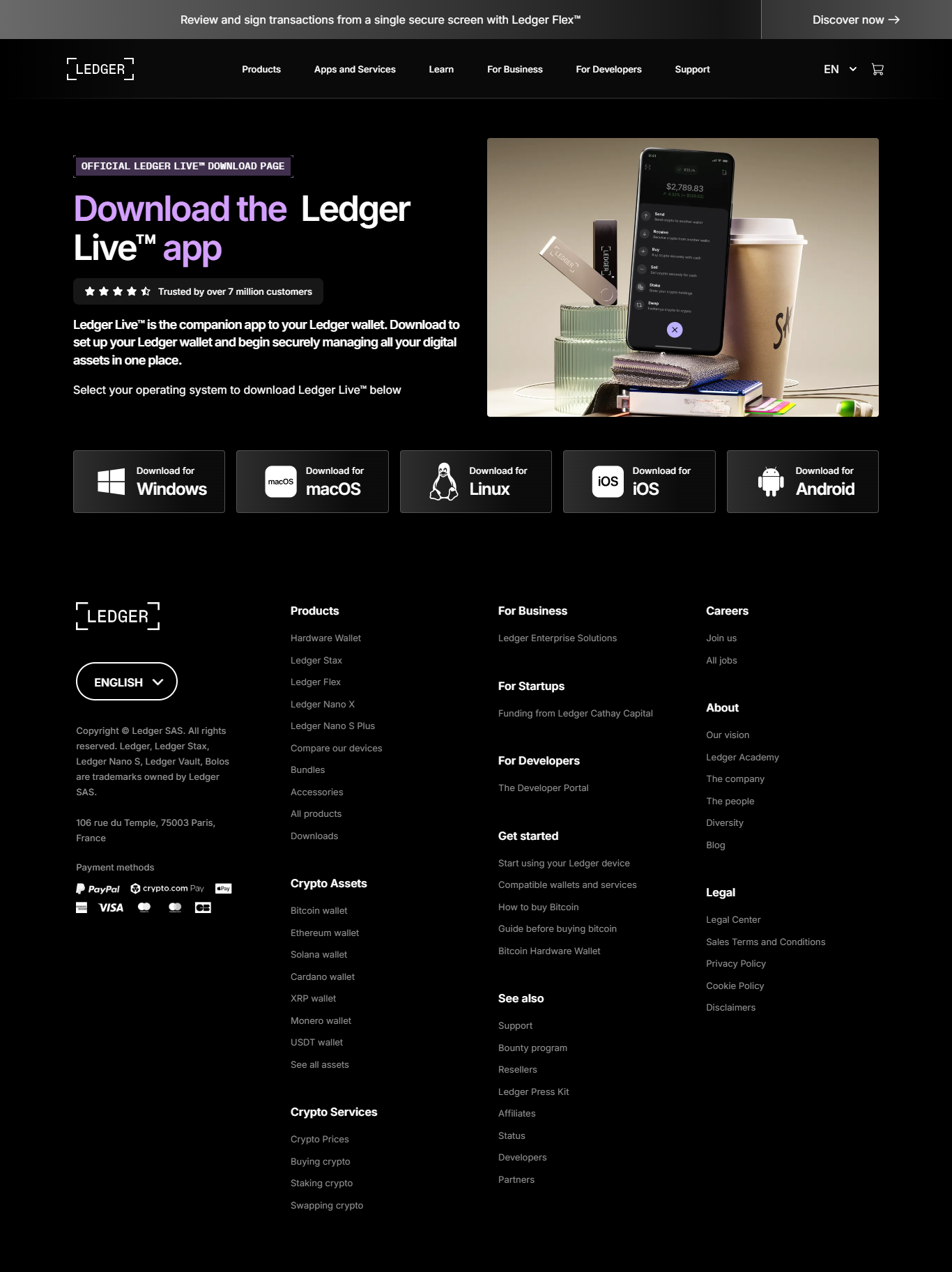
Ledger Login — The Definitive Guide to Secure Access, Hardware Verification & Self-Custody Mastery
Explore how Ledger login works, why hardware wallets isolate private keys, how cold storage strengthens protection, and how to avoid common scams using concepts like cryptographic signatures, deterministic wallets, and blockchain validation.
Why Ledger Login Matters for Crypto Security
Self-custody means you control your assets — and that control starts with a secure login workflow.
Ledger devices separate the interface from the signing process, ensuring that private keys never reach the internet.
Attackers know this, so they target users instead with cloned portals, support scams, and social engineering.
Understanding how Ledger’s architecture functions — including cold storage, secure elements, transaction signing, blockchain immutability, and HD wallets — helps you resist these threats effectively.
This article breaks down the process clearly while building confidence in the technical foundations behind Ledger’s security.
Ledger devices separate the interface from the signing process, ensuring that private keys never reach the internet.
Attackers know this, so they target users instead with cloned portals, support scams, and social engineering.
Understanding how Ledger’s architecture functions — including cold storage, secure elements, transaction signing, blockchain immutability, and HD wallets — helps you resist these threats effectively.
This article breaks down the process clearly while building confidence in the technical foundations behind Ledger’s security.
What Ledger Login Actually Performs
During login:
Ledger’s architecture balances usability with security, making it a preferred choice for long-term investors and DeFi users.
- The interface displays your accounts and balances
- The hardware wallet keeps cryptographic keys offline
- Authentication occurs on the physical device
- Signing is performed inside a secure chip
Ledger’s architecture balances usability with security, making it a preferred choice for long-term investors and DeFi users.
A Scam Avoided: The Fake Ledger Dashboard
Marco clicked what looked like the official Ledger dashboard.
The page quickly asked for his recovery phrase — a request that instantly signaled danger.
Recovery phrases should never be typed into a website, application, or chat.
After closing the page and checking the official domain, Marco realized he had avoided a major theft.
**Most scams succeed because users don’t understand the real workflow — knowledge breaks the illusion.**
The page quickly asked for his recovery phrase — a request that instantly signaled danger.
Recovery phrases should never be typed into a website, application, or chat.
After closing the page and checking the official domain, Marco realized he had avoided a major theft.
**Most scams succeed because users don’t understand the real workflow — knowledge breaks the illusion.**
Ledger Login — Safe Step-By-Step Process
1. Install Ledger Live Only From Official Sources
Fake pages often appear as sponsored results.
2. Open Ledger Live
The app is a viewer; keys remain offline.
3. Connect Your Ledger Device
USB or Bluetooth depending on the model.
4. Enter Your PIN on the Device
PIN stays offline — never visible to computers.
How Ledger Secures Private Keys
Ledger devices incorporate:
Concepts such as public-key cryptography and deterministic key derivation reinforce the system’s resilience.
- Secure element chips
- Offline cryptographic signing
- Physical screen verification
- Cold storage isolation
Concepts such as public-key cryptography and deterministic key derivation reinforce the system’s resilience.
Wallet Security Overview
| Wallet Type | Security | Key Control | Use Case |
|---|---|---|---|
| Ledger Hardware Wallet | Very High | User | Long-term custody |
| Mobile Wallet | Medium | User | Everyday spending |
| Exchange Wallet | Low | Exchange | Trading |
Essential Ledger Protection Rules
✔ Always download official software
✔ Never enter recovery phrases online
✔ Keep backups offline
✔ Approve transactions only on the device
✔ Avoid fake support portals
✔ Keep firmware updated
✔ Never enter recovery phrases online
✔ Keep backups offline
✔ Approve transactions only on the device
✔ Avoid fake support portals
✔ Keep firmware updated
Frequently Asked Questions
1. Does Ledger store keys in the app?
No — keys remain in the hardware wallet.
2. Is the PIN typed into the computer?
No — it is entered only on the device.
3. Can keys be extracted?
Not through remote software attacks due to offline signing.
4. Does Ledger support many assets?
Yes — thousands across multiple blockchains.
5. What if the wallet is lost?
Recover using your seed phrase on a new device.
No — keys remain in the hardware wallet.
2. Is the PIN typed into the computer?
No — it is entered only on the device.
3. Can keys be extracted?
Not through remote software attacks due to offline signing.
4. Does Ledger support many assets?
Yes — thousands across multiple blockchains.
5. What if the wallet is lost?
Recover using your seed phrase on a new device.
Conclusion — Secure Ledger Login Is the Pillar of Safe Self-Custody
Ledger login combines a clean interface with powerful hardware authentication that keeps keys offline and out of reach.
By relying on physical verification, cold storage, and secure chips, Ledger minimizes the risk of remote attacks and protects users even when their computers are compromised.
Safe habits — such as avoiding fake portals, never sharing recovery phrases, and trusting only the device screen — complete the defense.
Follow the authentic process, verify everything on the device, and keep full control of your crypto — securely and confidently.
By relying on physical verification, cold storage, and secure chips, Ledger minimizes the risk of remote attacks and protects users even when their computers are compromised.
Safe habits — such as avoiding fake portals, never sharing recovery phrases, and trusting only the device screen — complete the defense.
Follow the authentic process, verify everything on the device, and keep full control of your crypto — securely and confidently.